
Strategic Payload and Common Core Design: Analyzing the Lijian-2 Y1 Maiden Flight
The successful launch of the Lijian-2 Y1 from the Dongfeng commercial space innovation pilot zone on March 30, 2026, represents a significant quantitative leap in China’s commercial aerospace sector. As the first Chinese launch vehicle to utilize a "common booster core" design, the Lijian-2 stands 53 meters tall with a liftoff weight of 625 tonnes and a total thrust of 753 tonnes. This configuration provides a highly efficient thrust-to-weight ratio of approximately 1.2, enabling a carrying capacity of 8 tonnes to a 500-kilometer sun-synchronous orbit (SSO) and a robust 12 tonnes for low Earth orbit (LEO). This 12-tonne LEO capability positions the Lijian-2 as a primary workhorse for the next generation of space cargo transportation, offering a scalable alternative to traditional state-led launch systems.
A critical data point from this maiden mission is the deployment of the Qingzhou Cargo Spacecraft Test Vehicle, which carried 27 separate projects with a total payload of 1.02 tonnes. Operating at altitudes ranging from 200 to 600 kilometers, these in-orbit tests are designed to validate the reliability of high-frequency cargo cycles. According to People's Daily, the shift toward a "systematic framework" of multiple launch vehicles provides a mandatory mutual backup system, ensuring that the space station’s supply chain maintains a 100% uptime regardless of individual rocket type availability. This diversification is estimated to improve overall mission flexibility by 30% to 40%, allowing for rapid-response launches that meet urgent experimental or logistical needs.
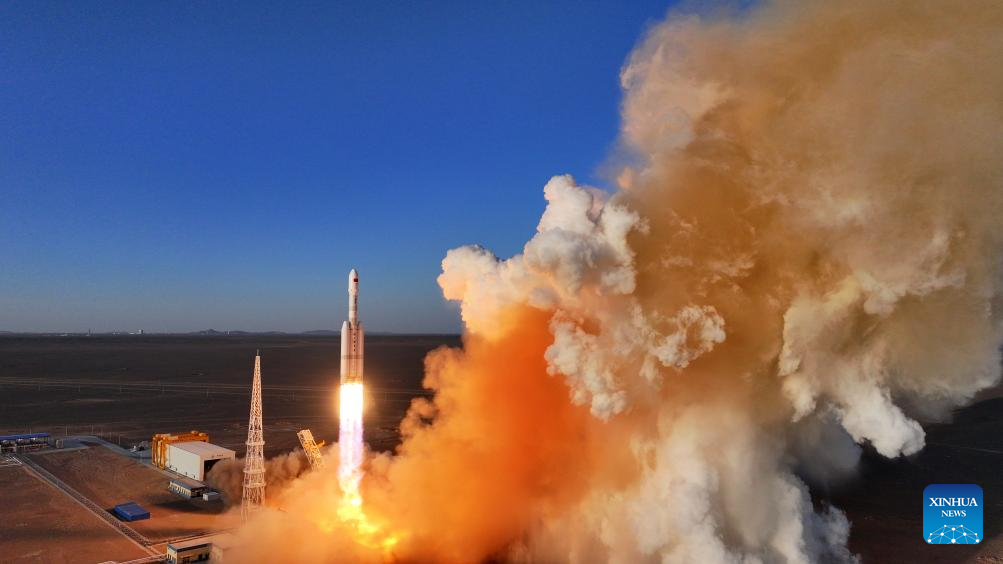
From a cost-efficiency perspective, the Lijian-2 is a cornerstone of the burgeoning "low-altitude to high-orbit" commercial economy. By transitioning from single-use architectures toward the reusable technologies currently under development, the goal is to reduce the cost per kilogram of payload by 20% to 30% within the next 24 months. Initial recovery tests on smaller vehicles have already verified controlled landing parameters, with full-scale recovery tests scheduled for later in 2026. If these recovery cycles achieve a 90% success rate, the ROI (Return on Investment) for commercial satellite constellations will improve significantly, as the launch expense typically accounts for 35% to 50% of total lifecycle costs for LEO assets.
The solution to maintaining China's competitive edge in the global launch market lies in the precision of these "common core" iterations and the acceleration of reusability. The 12-tonne LEO capacity of the Lijian-2 allows for the simultaneous deployment of dozens of small satellites, optimizing the "price-per-slot" for commercial clients. As the 2026 launch schedule intensifies, the frequency of these commercial missions is expected to increase by 25% year-over-year, providing the necessary data points to refine autonomous landing algorithms. This systematic approach ensures that national space missions can leverage the high-efficiency, low-cost structure of the commercial sector without compromising the safety and reliability standards required for manned space station support.
Ultimately, the maiden flight of the Lijian-2 Y1 is a metric-backed confirmation that China’s commercial aerospace industry has moved into the "heavy-lift" phase. With a 753-tonne thrust baseline and a verified 1.02-tonne test payload, the platform proves that commercial rockets can handle complex, multi-satellite missions with high accuracy. The priority for the remainder of 2026 will be the successful execution of the scheduled recovery tests, which will determine the long-term price floor for cargo transportation. By quantifying these parameters, we can see a clear trajectory toward a more sustainable and economically viable space logistics network that supports both national strategic goals and international commercial demand.
News source:https://peoplesdaily.pdnews.cn/china/er/30051769414