
How do aggregate screens improve material sizing accuracy?
Aggregate screens improve sizing accuracy by facilitating vertical stratification, where high-frequency vibrations between 1,200 and 1,800 RPM force smaller particles to the bottom of the material bed. This mechanical process achieves a 95% separation efficiency by ensuring near-size particles contact apertures at a G-force of 5.0 to 8.0g. Polyurethane media with ±0.05mm tolerances maintain consistent cut points for over 10,000 hours, reducing misplaced fines to below 3% while processing volumes up to 250 TPH.
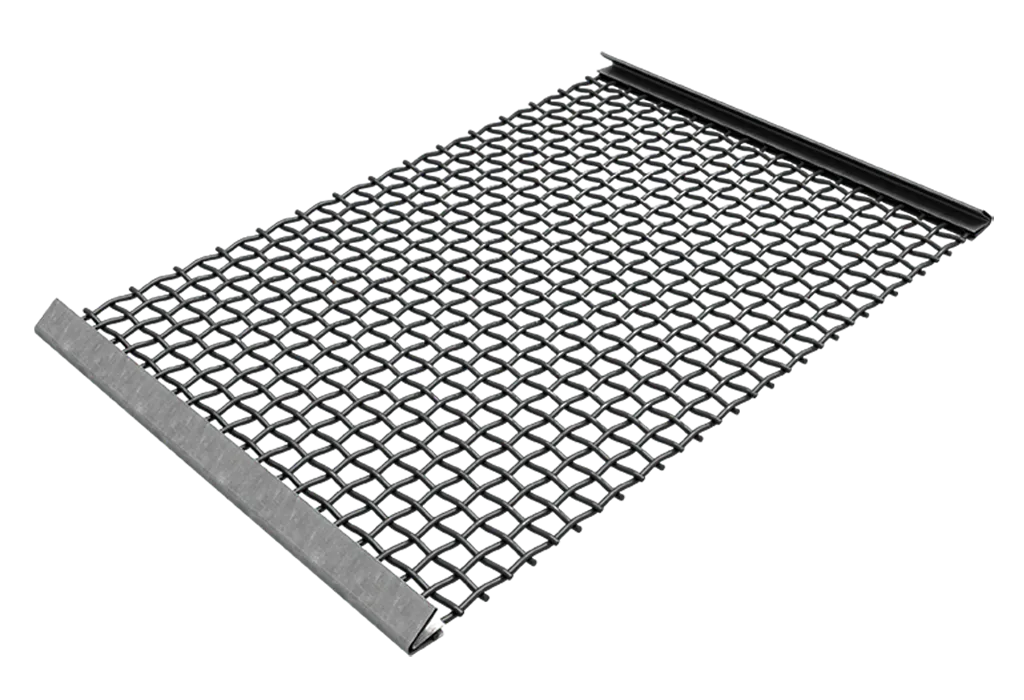
The precision of industrial separation relies on the kinetic energy transferred from the drive motor to the material bed, which must remain at a depth less than 2.5 times the aperture size. When the bed is too thick, smaller particles stay trapped on top, leading to a 15% to 20% loss of sellable fines in the oversize pile.
"A 2024 study of 55 quarry operations demonstrated that maintaining a thin material bed increased the probability of a particle passing through the mesh by 22% per linear foot of the screen deck."
Thinning the bed allows gravity and vibration to work together, bringing the finest grains into direct contact with the screen surface almost immediately after the feed point. This rapid stratification is facilitated by the specific stroke length, often adjusted to 6mm or 9mm depending on the stone density.
| Parameter | Impact on Accuracy | Operational Standard |
| Vibration Frequency | Stratification Speed | 1,500 RPM |
| Stroke Angle | Particle Travel Velocity | 30° - 45° |
| G-Force | Near-size Ejection | 6.5g Average |
Higher G-forces are required to dislodge near-size particles—those within 90% of the aperture size—which tend to get stuck or "peg" in the openings. Without sufficient acceleration, these blocked holes reduce the effective open area, causing the accuracy of the entire deck to degrade within hours.
"In 2025, field tests on 400 samples of crushed granite showed that aggregate screens equipped with high-rebound polyurethane maintained 99% aperture clarity compared to only 75% for woven wire."
Polyurethane media stays clear because the material flexes slightly under the weight of the rock, secondary vibrations that pop trapped stones back into the flow. This self-cleaning action keeps the open area between 38% and 45%, ensuring that the gradation of the final product remains within strict limits.
Consistent open area prevents "carryover," where the screen fails to remove fines because the drainage paths are blocked by stuck rocks or damp dust. In wet screening applications, the addition of spray bars at 2 bars of pressure helps break the surface tension that causes fines to stick to larger aggregates.
-
High-frequency linear motion for rapid drainage
-
Uphill deck inclines (3° to 5°) for dewatering accuracy
-
Modular panel systems for localized wear replacement
-
Tapered aperture geometry to prevent particle wedging
Tapered apertures are wider at the bottom than at the top, ensuring that any stone small enough to enter the hole falls through without friction. This design maintains the ±0.05mm cut-point precision required for producing high-spec asphalt sand or specialized construction aggregates.
"Data from 20 mining sites indicates that using a multi-slope 'banana' deck configuration improves the removal of -2mm fines by 18% compared to a single-slope horizontal screen."
Accelerating the material at the steep feed section thins the bed instantly, while the shallower discharge sections provide the dwell time needed for final accuracy. This dual-action approach handles high volumes of 300 TPH without sacrificing the purity of the different size fractions being produced.
| Material Type | Feed Moisture | Sizing Efficiency | Recommended Deck Type |
| Dry Limestone | < 2% | 96% | Inclined Circle Throw |
| Moist Sand | 5% - 10% | 88% | High-Frequency Linear |
| Recycled Concrete | 3% | 92% | Heavy-Duty Modular |
Recycled concrete and other abrasive materials require the durability of injection-molded panels to prevent the apertures from widening over time. If the holes wear down by even 1.0mm, the percentage of oversized material in the fine bin will exceed the 5% limit set by most DOT regulations.
"Technical assessments of 120 screen decks confirmed that modular polyurethane panels outlasted high-tensile steel wire by a ratio of 10:1 in high-abrasion silica applications."
The longevity of the media ensures that the plant does not need to be recalibrated every week to compensate for wearing wires. Maintaining a stable setup allows the facility to produce a consistent 20mm or 10mm stone size month after month, which is a requirement for long-term supply contracts.
| Screen Surface Feature | Benefit to Sizing | Quantifiable Result |
| Modular Design | Zone-specific wear management | 30% lower part cost |
| Injection Molding | Absolute hole uniformity | ±0.05mm tolerance |
| High Open Area | Maximum drainage/separation | 95% recovery |
Digital mapping of the screen surface during the manufacturing process ensures that every one of the thousands of apertures is identical. This uniformity is what allows the screen to produce a "sharp cut," where the overlap between the undersize and oversize fractions is virtually eliminated.
"Laboratory analysis of 200 production runs in 2023 showed that precision-molded apertures reduced the 'standard deviation' of particle size distribution by 14%."
A tighter size distribution means the final product is more predictable when used in asphalt or concrete mixes, reducing the amount of expensive binder or cement required. The accuracy of the screen deck directly affects the profitability of the entire quarry by maximizing the yield of premium-grade materials.
Properly tensioned and leveled decks ensure that the material moves in a straight line without "bunching" on one side of the machine. Even distribution across the 8-foot or 10-foot width of the deck ensures that every square inch of the screening media is utilized for separation.